Board Up After Fire
in Orange County
Once the fire is out and the scene is released, the property still has to be secured — against rain, against looters, against anyone wandering into a damaged building. We board the openings and tarp the roof, and we prepare the paperwork your insurance claim needs.
Request a Free Quote
Get a fast response for your Board Up After Fire
A fire is over when the fire department says it is over — but the damage to the property is not. Broken windows, open doors, a roof with holes in it, and a structure that is suddenly visible and accessible from the street. Board up after a fire is the first step of the recovery: close the property, keep the weather out, keep people out, and protect what survived until the restoration crew can start.
Board Up USA secures fire-damaged homes and commercial properties across Orange County. We board the windows and doors the fire damaged, tarp the roof where it is open, and secure the property so the restoration team can work safely. We never enter a property that is still burning or under a fire-department order — the job starts when the scene is released, and the documentation we prepare goes straight to your insurance claim.
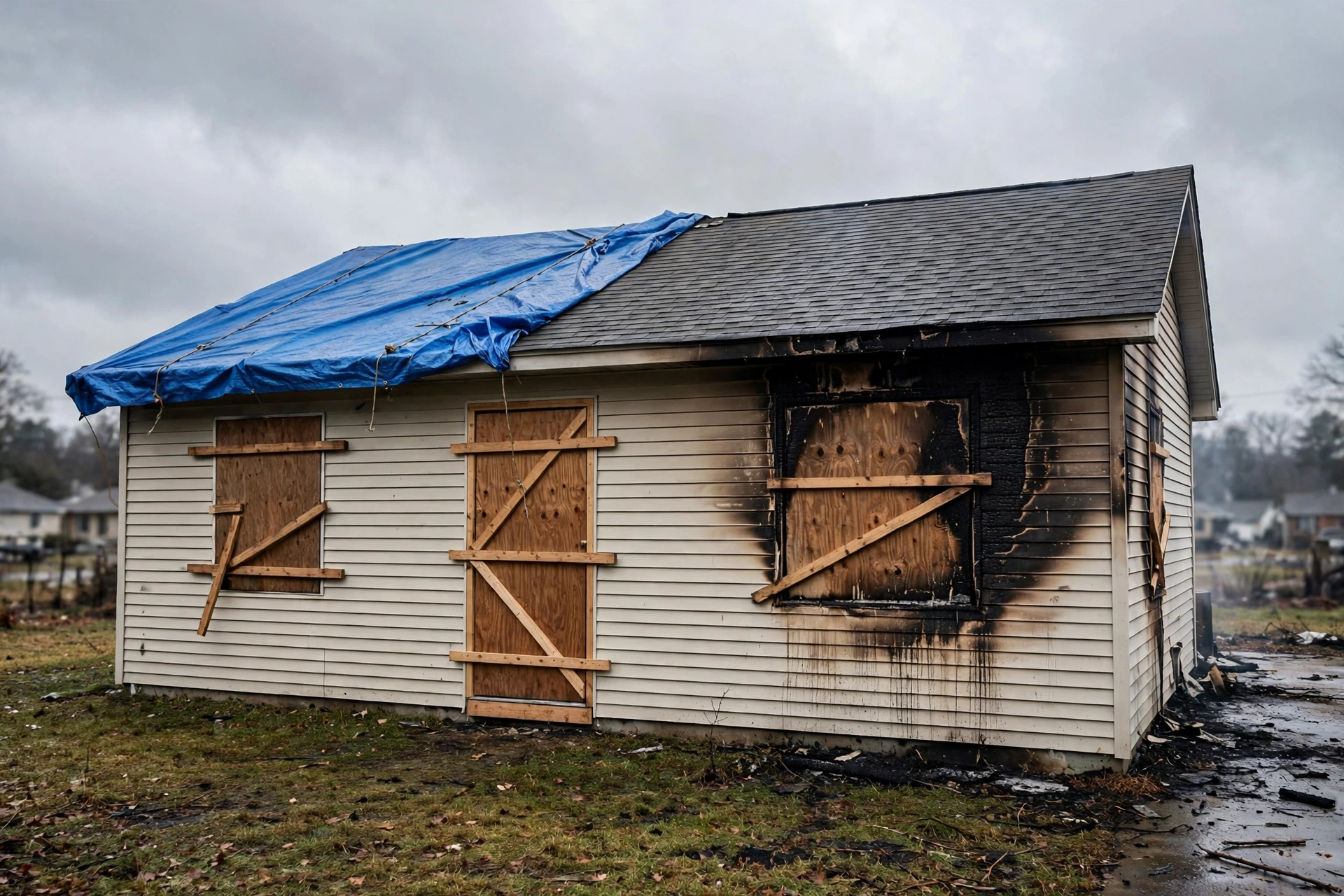
Secure the Property After the Fire Is Out
The first hours after a fire are when a property is most vulnerable. The windows are broken or blown out, the doors may not close, and the structure is open to rain, to wind, and to anyone who walks past. Looting after a fire is a real risk — not just of valuables, but of copper, fixtures, and appliances — and an unsecured fire-damaged building is also a hazard to anyone who wanders in.
Our job is to close the property fast. We board every opening the fire created — windows, doors, and any opening where the structure has failed — with 5/8-inch CDX plywood, 2x4 bracing, and anti-pry screws. We clear the glass and debris from the paths the restoration crew will use, and we photograph everything before we board it, so the insurance claim has a record of the damage as it stood when we arrived.
Board Up + Roof Tarping Together
A fire that breaks through a roof leaves the building open to the sky, and the next rain will do as much damage as the fire did. That is why board up after a fire almost always includes roof tarping: a heavy-duty tarp secured over the damaged section of the roof, fastened so it holds against wind and rain until the roof can be repaired.
We tarp the roof in the same visit as the board up, because the two jobs protect the same thing — the interior of the building. The tarp is secured with battens and fasteners that will not lift in a storm, and we note the size and location of the roof damage in the written record so the roofing contractor knows what they are coming to. Board up closes the walls; tarping closes the roof. Together, they keep the weather out while the restoration is planned.
What We Secure After Fire Damage
Fire damages a property in more places than the room that burned. Heat breaks windows in adjacent rooms, smoke and water damage spread through the building, and the fire department's own work — breaking windows for access, opening the roof for ventilation — creates openings that have to be closed. We secure every one of them: windows, doors, skylights, and roof openings, and we check the openings the fire did not touch but the firefighting did.
We also secure the structure itself where it has been compromised: a door frame that no longer holds a door, a window opening where the frame has burned away. Those openings get braced before they are boarded, so the panel holds and the structure is not loaded further. And we secure the property against unauthorized entry — a fire-damaged building with an open door is a danger to anyone who walks in, and a liability for the owner.
What Not to Do After Fire Damage
Do not go back into a fire-damaged building until the fire department says it is safe. The structure may be compromised, the air may still carry smoke and soot, and a floor that looks solid may not be. Do not turn the power back on, do not turn on the gas, and do not try to clean soot off walls or furniture yourself — soot is acidic, it spreads with wiping, and it can make the damage worse.
Do not throw anything away before the insurance adjuster has seen it. Damaged belongings are part of the claim, and the adjuster needs to see them in place. Take photos of everything before anything is moved, keep the receipts for any emergency spending, and call your insurer promptly — most policies require timely notice of a loss. And do not hire a restoration company on the spot in the middle of the night. Secure the property first, then choose the restoration crew with a clear head.
Insurance Documentation After a Fire
A fire claim is the biggest claim most property owners will ever make, and it lives or dies on documentation. We prepare the record on the night of the job: photos of every opening before and after boarding, a written record of what was damaged and what was secured, and the roof tarping noted with the size and location of the damage. That record goes to your insurer and to the restoration company that follows us.
We offer direct insurance billing, so the board up and tarping do not have to be paid out of pocket while the claim is being processed. Keep the fire department's incident report number, take your own photos before anything is moved, and contact your insurer promptly. If the fire is being investigated — and many are — tell us when you call, so we work inside the fire marshal's instructions and do not disturb anything the investigation needs.
Board Up for Rental Properties After a Fire
A fire in a rental property adds a second owner to the job: the tenant has lost their home, and the landlord has lost a rentable unit. The board up has to serve both of them. The tenant needs their belongings secured — what survived the fire is still in the building, and it needs to stay there. The landlord needs the property closed, the claim documented, and the restoration planned so the unit can be rented again.
We work with landlords and property managers on fire jobs the same way we work on any commercial job: a written authorization, a record of every opening boarded, and photos that go to the owner and the insurer the same night. If the tenant is still on site, we work around them and their belongings. If the tenant has moved out, we secure the property and the landlord decides what happens next. Either way, the board up and the roof tarping are the first step — and they are the step that keeps a bad situation from getting worse.
What Affects the Cost of Fire Board Up
The cost of boarding up after a fire depends on how many openings the fire created and how big they are, whether the roof needs tarping as well as boarding, how much debris has to be cleared before the crew can work, and how much of the structure is compromised and needs bracing. A single room with two broken windows is a small job; a house with a burned roof and every window broken is a large one.
We give you a free quote before work starts, and there are no surprise charges after the work is done. The quote covers the boarding, the bracing, the roof tarping, the debris clearing, and the documentation package. In most cases the board up and tarping are covered by the property insurance claim, and we bill the carrier directly.
What We Secure After a Fire
- Windows and doors broken by the fire or the firefighting
- Roof openings — tarped in the same visit
- Skylights and vent openings
- Damaged frames — braced before boarding
- Openings created for fire-department access
- The whole perimeter, against looting and unauthorized entry
What Affects the Cost
No prices are published — every job is different, and we give you a free quote before work starts. These are the factors that set the cost:
- Number and size of the fire-damaged openings
- Roof tarping alongside the board up
- Debris clearing before the crew can work
- Structural bracing where frames are compromised
- Night, weekend, or holiday dispatch
- Documentation package for the insurance claim
How Emergency Board Up Works
One call is all it takes. Here is what happens from the moment you reach us to the moment your property is secure.
Call
Call (714) 942-5099 any time — day or night. Tell us what happened, what kind of opening is damaged, and where the property is in Orange County.
Dispatch
We dispatch a crew with the plywood, bracing, and tools for that opening. Typical response across Orange County is 30 to 60 minutes.
Board & Document
The crew boards the opening with 5/8-inch plywood, 2x4 bracing, and anti-pry screws, clears the glass debris, and photographs every opening.
Insurance Paperwork
We prepare the photo documentation and written record your insurance claim needs — and we offer direct insurance billing.